General information about how home insurance claims commonly work in Alberta. Your own policy wording decides what's covered, so read it and ask your insurer or broker to confirm anything that matters to you.
An adjuster is not walking your roof looking for dents. They are running a repeatable method designed to answer one question: is there *functional* damage, caused by hail, sufficient to require replacement rather than repair.
Understanding that method explains many of the frustrating outcomes in a hail claim, including why your roof was denied when your neighbour’s was approved, and why two inspectors looking at the same roof reached different answers.
The test square
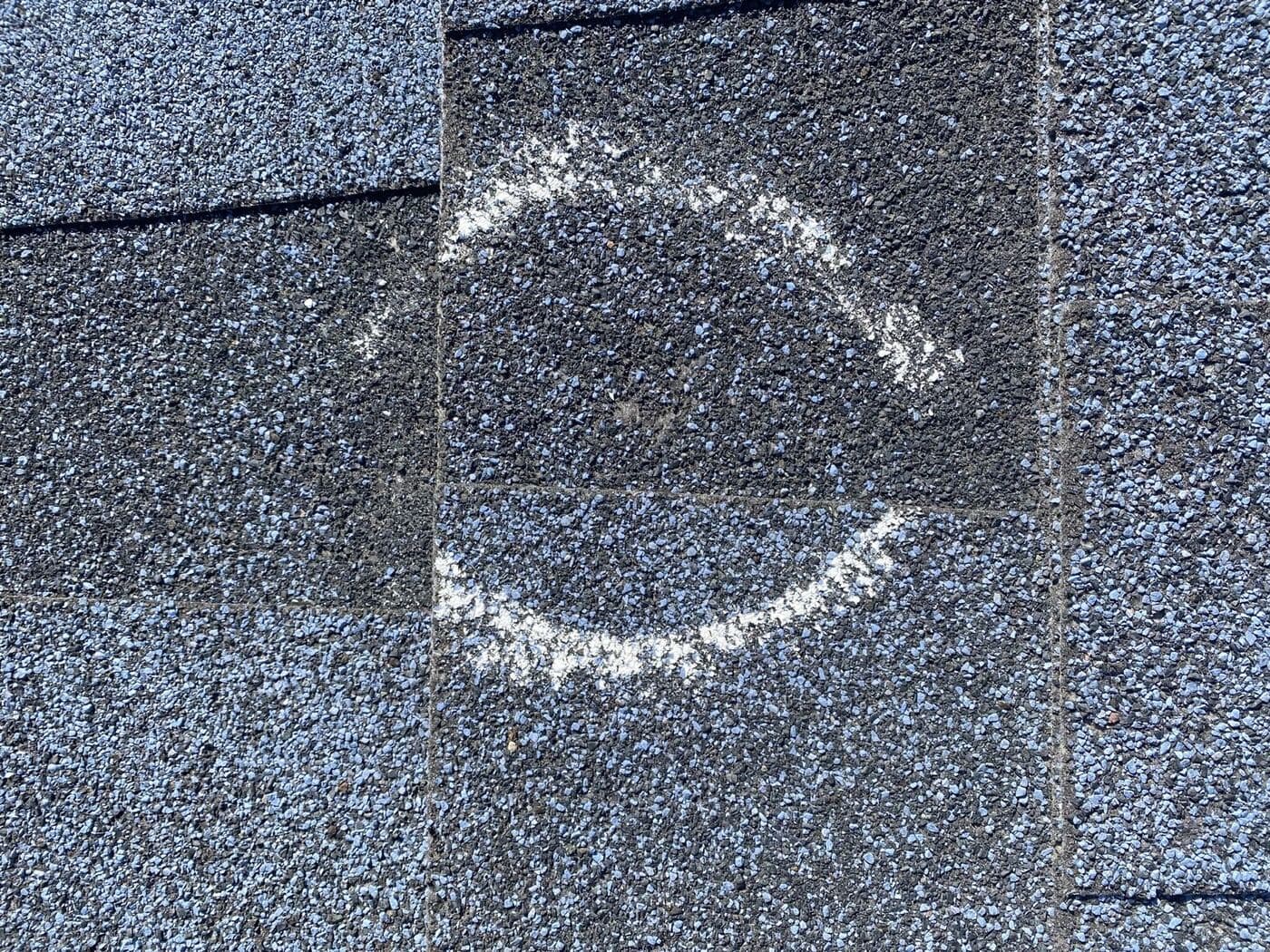
A common approach is to mark a sample area, a test square, on each slope and count qualifying hail impacts inside it. Insurers and adjusting firms set their own thresholds for how many hits, on how many slopes, before a slope or the roof qualifies for replacement, so ask your adjuster what the file is being assessed against.
This is why placement matters. Hail falls in streaks and does not distribute evenly across a roof. A square placed in a lightly-hit area of a genuinely damaged slope produces a low count and a denial. That is not necessarily bad faith. Test squares are a sampling method, and sampling has variance. It is also exactly why an independent assessment that documents the whole slope carries weight.
Functional versus cosmetic
The distinction that decides most disputes. Functional damage shortens the life or impairs the performance of the roof: a bruise that has fractured the mat, granule loss exposing asphalt, a puncture. Cosmetic damage is marking that doesn’t affect performance, and some policies exclude it, particularly on metal roofing.
On asphalt shingles the argument is usually about bruising: a soft spot where the mat has fractured under intact-looking granules. IBHS describes bruising as a soft spot you can feel when pressing on the shingle. It doesn’t photograph well without raking light and a scale reference, and it is easy for a rushed inspection to miss.
What corroborates a hail claim
Adjusters look beyond the shingles, and so should any report submitted to them. IBHS lists dents and spatter marks on soft metals and equipment among the signs of hail.
- Dents on the top face of eavestrough and on downspouts.
- Dinged vent caps, flashing, and roof-mounted mechanicals.
- Pitted AC condenser fins.
- Marked fence caps, deck boards and window wraps.
- Damage on the elevations consistent with the storm’s direction of travel.
Why two inspections disagree
Rarely because one party is lying. Usually because of test square placement, lighting conditions on the day, whether the inspector was trained to recognise bruising versus mechanical marking or normal weathering, and whether they assessed against a published methodology or their own judgement. Two people using different definitions of damage will reach different conclusions on the same roof, every time.
That is why we assess to HAAG methodology: Haag’s certification programs are designed for field adjusters, estimators and consultants, so the report and the reviewer are more likely to be working from the same definitions.
What to do on the day
Be there. Ask where the test squares are being placed and why. Ask the adjuster to look at the soft metals. If you have an independent report, provide it before the inspection rather than after. It’s far easier to agree a scope on the roof than to reopen one afterwards. And if you disagree with the outcome, a supplement with new documentation is a normal part of the process, not a fight.
My claim was denied. Is that final?
No. A denial can be supplemented with new documentation, reinspected, and if it stays deadlocked on the amount rather than on coverage, Alberta’s statutory dispute resolution process (often called appraisal) exists for exactly that. Each is a normal step. What changes outcomes is evidence, not persistence.
My neighbour got approved and I didn’t. How?
Hail falls in streaks, so genuinely different damage on the same street is common. It can also be test square placement or a different inspector. What your neighbour’s approval does establish is that a damaging storm hit your street, which removes the hardest argument.
Can I be present for the inspection?
Yes, and you should be. You don’t need to go on the roof. Being there means you can ask where squares are being placed, point out the gutters and the AC unit, and hear the reasoning first-hand rather than reading a conclusion weeks later.
Does an independent inspection actually help?
When it’s documented to a methodology the adjuster recognises, yes. It gives them something to reason from rather than something to argue with. A report that just asserts damage without test squares, photographs and scale references adds nothing.
Where the facts on this page come from. If a source has changed since we last checked, tell us and we'll fix the page.
- Is it hail damage? · Insurance Institute for Business & Home Safety
- Haag Certified Master Level: raising the bar in damage assessment · Haag
- Hail and insurance · Insurance Bureau of Canada
- Insurance Act, RSA 2000, c I-3 (ss. 519, 526 and 540, Statutory Conditions 11 and 12) · Alberta King's Printer