
Hail or storm damage? We document it, meet your adjuster, and do the work.
Calgary sits in Alberta's Hailstorm Alley, one of the most active hail zones in Canada. If a storm hit your roof, we document the damage, back your claim with evidence, and do the work.
We document the full scope in one pass, so there's no back-and-forth with your adjuster.
SERVING NW · NE · SW · SE CALGARY, PLUS AIRDRIE, CHESTERMERE, COCHRANE, OKOTOKS, CONRICH, BEARSPAW, HIGH RIVER & STRATHMORE
WHAT'S INYOUR CLAIM FILE
“Trust us, it hailed” doesn't move an adjuster. Evidence does. Every inspection produces a storm-damage report built the way claims actually get read. Depending on your roof and your storm, it includes:
Independent storm verification
Environment Canada storm data tied to your exact date of loss: the event, the track, the hail size. Proof it was hail, and proof it was that storm.
Aerial measurement
Exact roof geometry (area, facets, pitch, every edge length) from the same aerial measurement reports insurers use themselves. Nobody argues about the numbers.
Test squares on every slope
A chalked 10×10 test square per elevation, impact counts photographed with the slope letter in frame, following Haag's published methodology.
Pre-storm baseline
Imagery of your roof from before the date of loss, so nobody can claim the damage “was already there.”
A pinned photo library
Every inspection photo mapped to its spot on the roof overview, so the adjuster can check each impact against exactly where it sits.
Line-item scope
Every line in the estimate is tied to a building-code requirement or a damage photo, priced in the same format your insurer's software uses. Nothing padded, nothing vague.
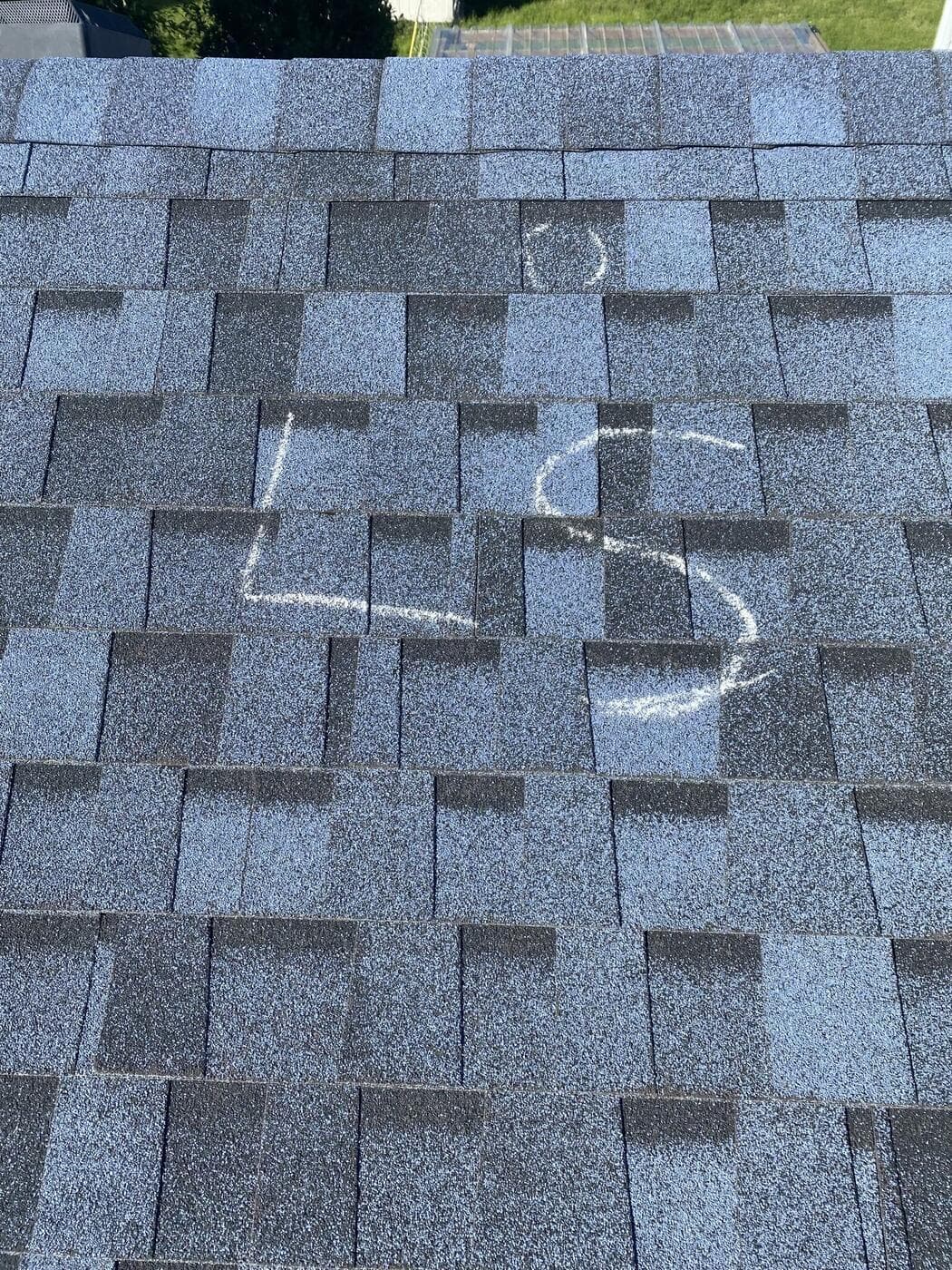
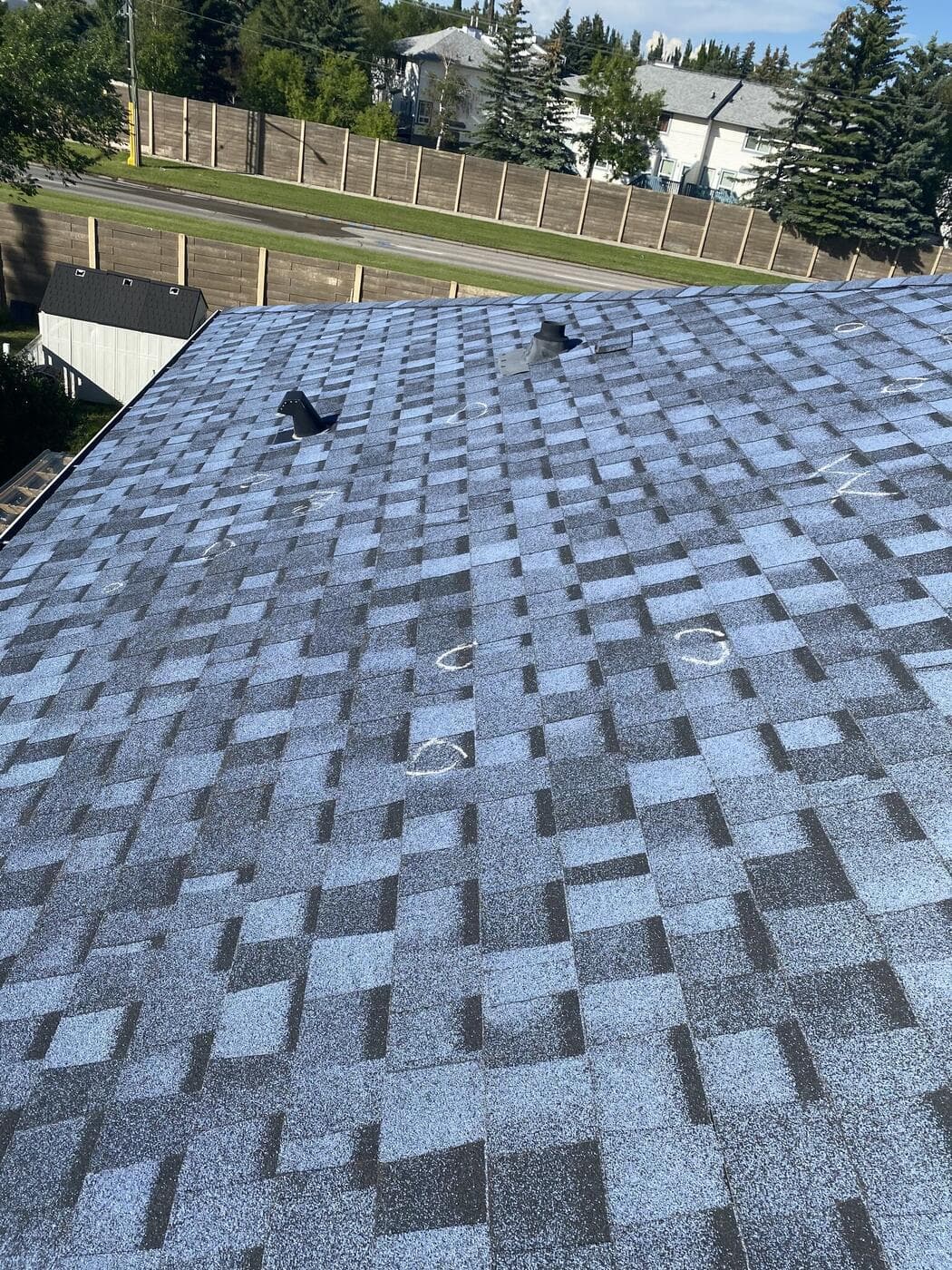
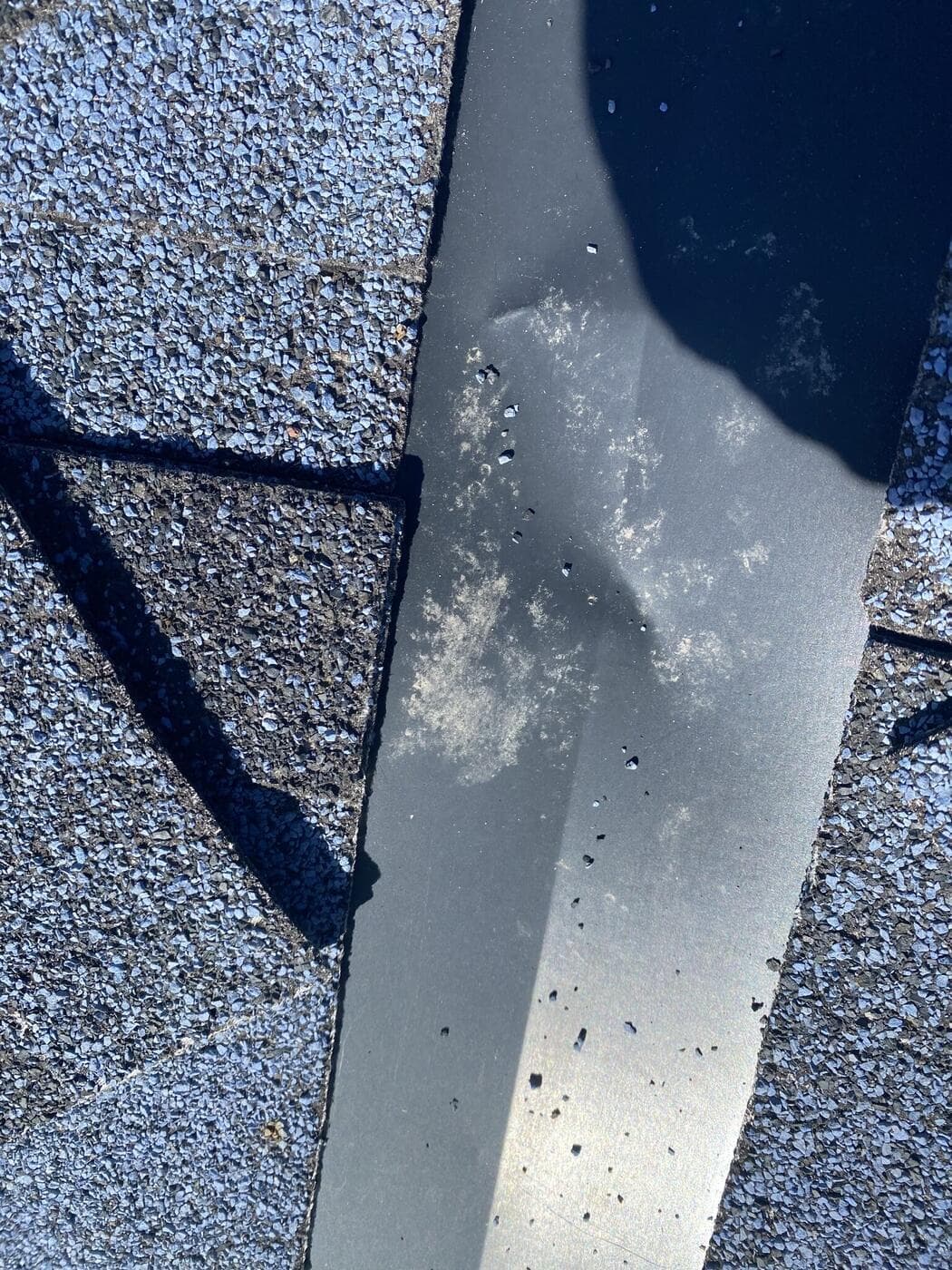
We built this system around what adjusters actually check, then field-tested the whole thing on real Calgary roofs, measurement to final report, before putting it in front of an insurer.
We had our roof done by BBR in July. They were absolutely great to work with. We are original house owners in Citadel and still had the original shingles. We'd been putting off major repairs for awhile but rain storms back in June made it quite clear that we needed to fix our leaky roof. After ourREAD IN FULL ON GOOGLE
HERE'S EXACTLYWHAT HAPPENS
- 01
We document the full scope
We get on your roof and document every bruise, crack, and granule strip: chalked test squares on every slope, close-ups of the soft metals, aerial measurement, storm data matched to your date of loss. The whole scope in one pass, so your adjuster gets it all at once instead of sending us back for more. You get the full picture before anyone files anything.
- 02
You file, we back it up
You stay the policyholder, and the claim stays in your name. We give you what to send in: the damage report, the photos and our estimate. If you want us to speak with your insurer about our scope, ask them what written authorization they need.
- 03
Adjuster meeting
We meet your adjuster on-site and walk the documented scope with them, slope by slope.
- 04
We complete the work
Once it's approved, we replace your roof to code.
WHAT YOU'LLACTUALLY PAY
Insurance work has its own vocabulary, and it's where homeowners get blindsided. Here's how the money works, so nothing surprises you on the back end.
Your deductible
This is the part you pay. On an approved claim, you typically only pay your deductible, and your insurer pays out the rest of the approved scope. We document everything they need to release it, so the numbers line up and nothing stalls.
ACV vs. RCV
Most policies are Replacement Cost Value (RCV): they pay what it costs to replace the roof today. Some are Actual Cash Value (ACV): they pay replacement cost minus depreciation, and you eat the difference. Check which one you have before you file, because it changes what you get paid.
Depreciation holdback
On an RCV policy the insurer often pays in two parts: an upfront cheque (ACV), then the held-back depreciation once the work is done and invoiced. That second cheque is real money you're owed.
Check your hail deductible before you file
Hail deductibles in Calgary have gone up. A $1,000 hail deductible used to be common; many carriers now set it at $2,500 to $5,000, and higher for homes without a hail-resistant roof. It's printed on your policy's declarations page under "deductible". Get the exact dollar figure from your broker before you file. We'll walk you through it on the inspection.
SIGNS YOUR ROOFTOOK HAIL
Hail damage is easy to miss from the ground, but if a storm worked your neighbourhood over, the clues are usually there. A few to look for:
- Dented gutters, downspouts, or metal roof vents
- Shingle granules collecting in gutters or at the downspout splash blocks
- Bruised or cracked shingles (soft spots, like a bruise on fruit)
- Dings on your AC unit, fence, deck, or siding. If hail hit those, it hit your roof
- New leaks or water stains on the ceiling after a storm
Most of this is hard to confirm without getting up there safely, which is what the inspection is for. You don't climb. We do, and we show you the photos: every slope, shot by shot, in a written report.
STRAIGHT ANSWERS
Will my premium go up if I file?
It depends on your insurer and your policy, so ask your broker before you file. A hail claim is a weather claim, not an at-fault one, but some carriers adjust renewals, hail deductibles or how they rate an older roof after a claim. Get the specifics in writing.
What if my claim gets denied?
It happens, usually for pre-existing damage or a roof already past its service life. We'll show you exactly what we found and lay out your out-of-pocket options. We don't promise approvals. Anyone who guarantees one is lying to you.
How long does the whole process take?
For a legitimate hail claim, typically 30–60 days from inspection to final paperwork. Weather, adjuster schedules, and any supplements can move that, and we keep you posted the whole way.
How long after a storm do I have to file?
Sooner is better. Most policies expect you to report damage promptly, often within a year of the storm date (some carriers want it sooner), so don't sit on it. The longer you wait, the harder it is to tie the damage to a specific storm instead of plain wear. If a big hail event rolled through your area, get it looked at while the evidence is fresh. Check your own policy for the exact window.
What do I actually pay out of pocket?
Usually just your deductible. Your insurer pays out the approved scope minus that deductible. Check whether your deductible is a flat amount or a percentage of your home value. See "What you'll actually pay" above.
Can I choose my own contractor?
Yes. In Alberta the homeowner picks the contractor. Your insurer can suggest one of theirs, but the choice of contractor is yours.
Do I need to get multiple quotes?
Not for insurance work. The claim pays the approved scope at fair market pricing, so you don't need to collect three quotes like a cash job. One contractor who documents the damage properly is what actually moves the claim.
STORM HIT?START HERE.
Tell us when the storm was and what you've noticed. We document the damage and walk you through the claim.