
WHAT HAIL DAMAGEACTUALLY LOOKS LIKE.
Most hail damage doesn't look like damage. It looks like a normal roof — until someone gets close enough to press on it. Here's what's actually happening up there, and which of it an insurer pays for.
YOU CAN CHECK THREE OF THESE FROM THE GROUND.
Bruising you feel before you see
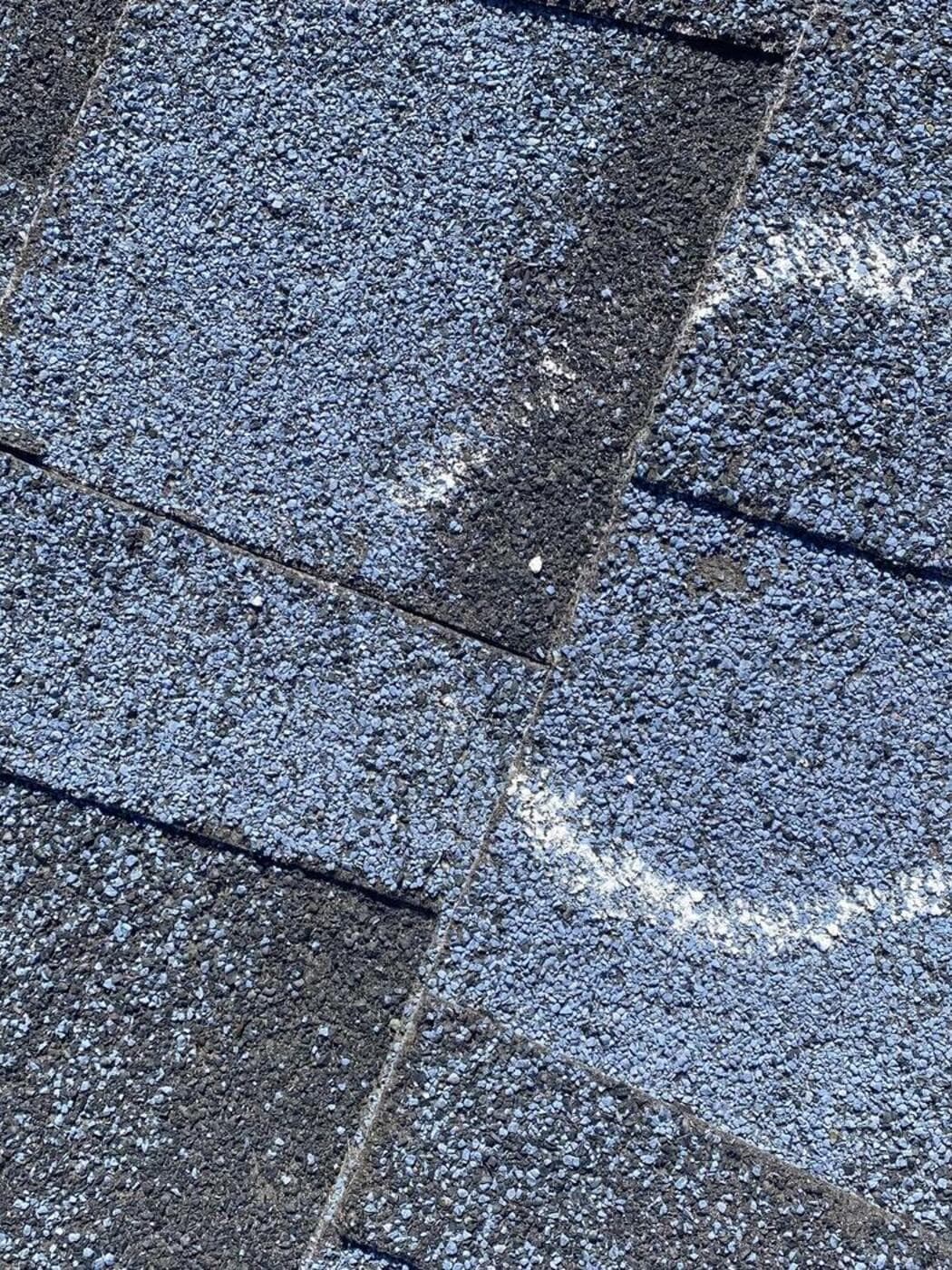
A hail strike knocks the mat loose under the surface. It reads as a soft spot — like a bruise on fruit — and often isn't visible in a photo taken from a ladder, let alone from the driveway. This is the most common form of real hail damage and the most commonly missed.
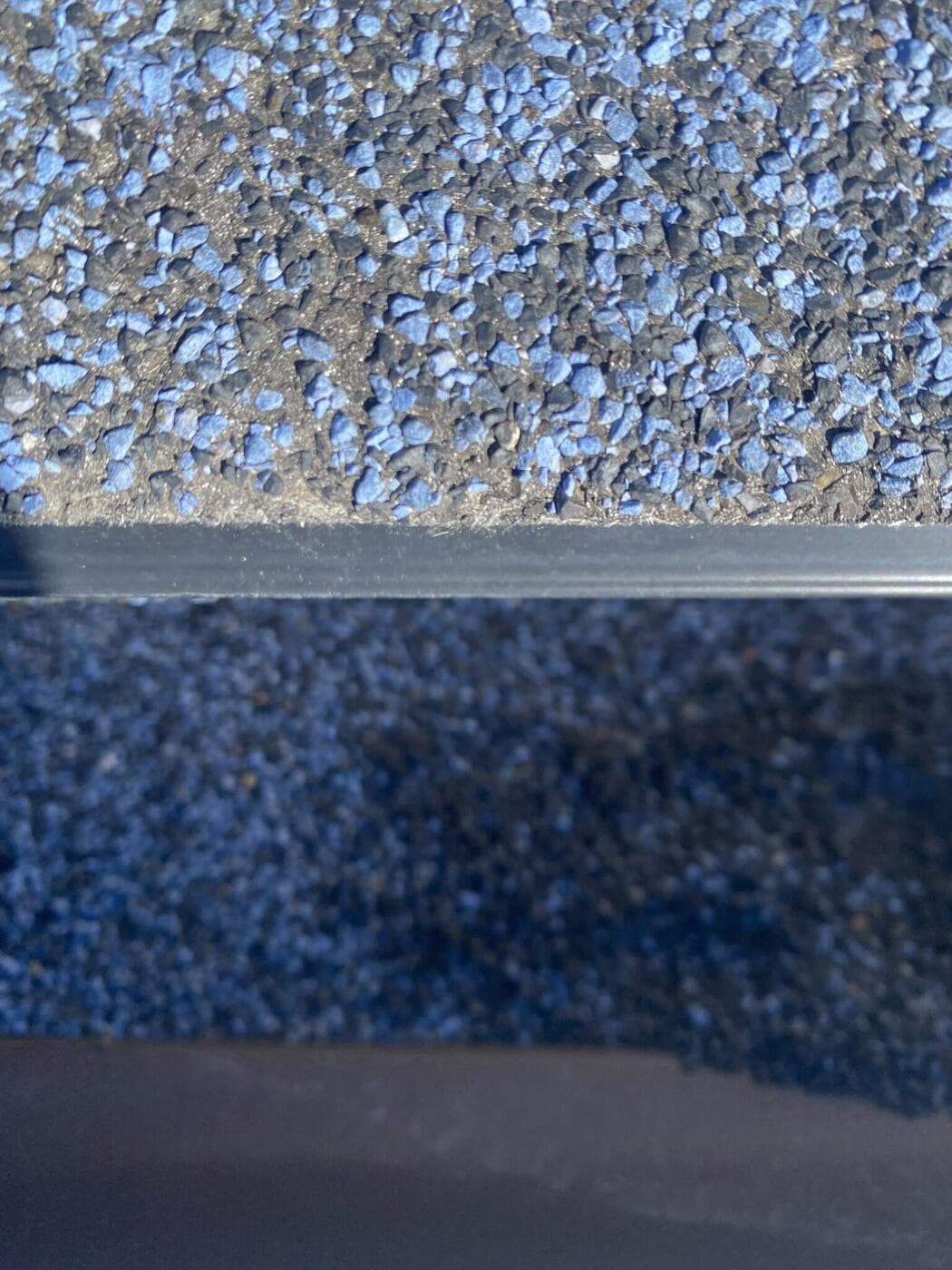
Granule loss down to the mat
The coloured granules are the shingle's UV protection. Where hail strips them, the black asphalt underneath is exposed and the shingle starts aging fast. Granules collecting at the bottom of downspouts are the tell from the ground.
Soft metals tell the truth
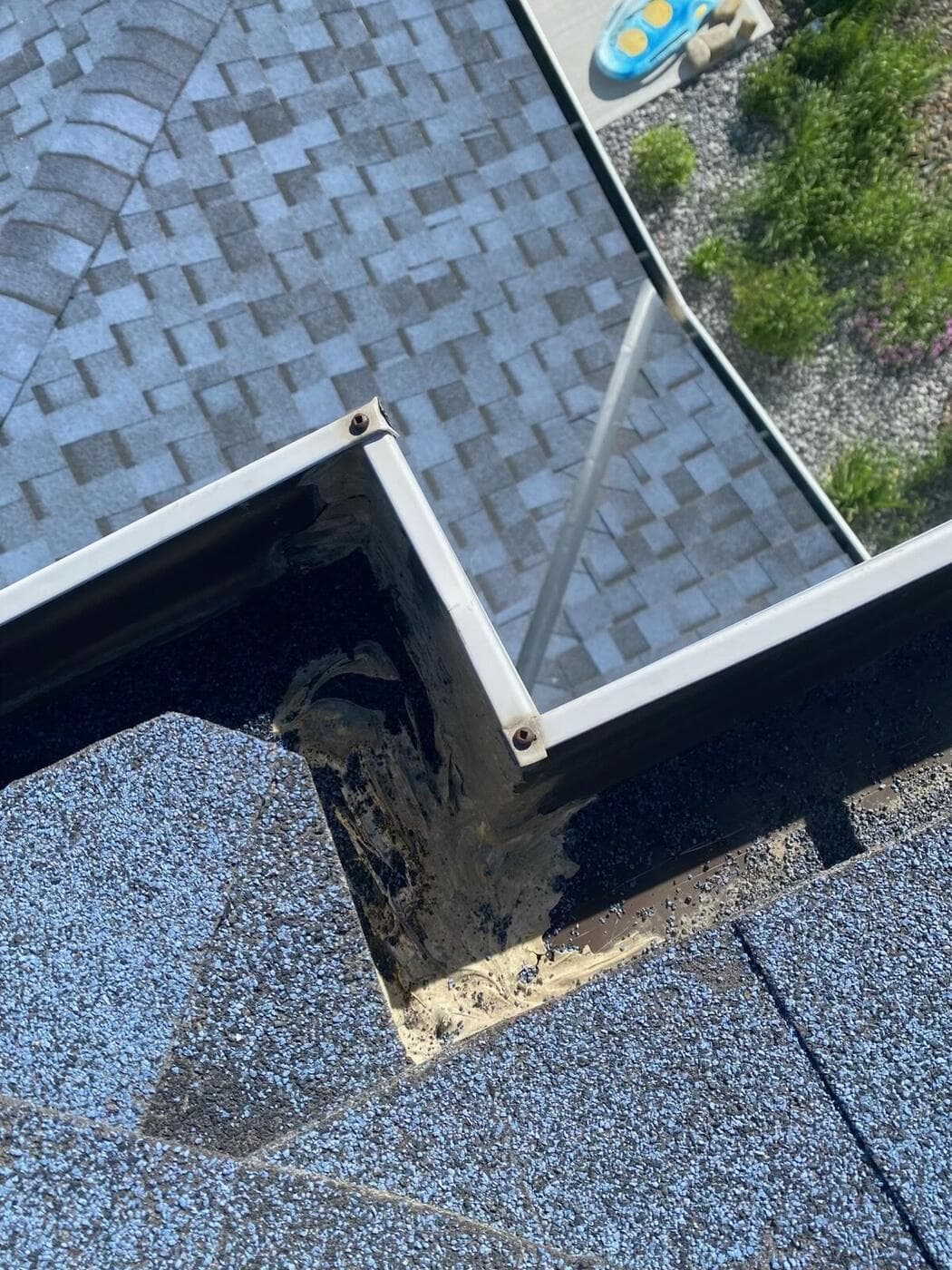
Vents, flashing, gutters and downspouts dent at lower impact than shingles do. If the metal on your roof is dimpled, hail hit hard enough to be worth a proper look at the shingles.
Collateral at ground level
Dings on the AC unit, fence caps, deck boards, or siding. If hail marked those, it hit the roof too — and unlike the roof, you can check them without a ladder.
FUNCTIONAL DAMAGE VS COSMETIC.
An adjuster is answering one question: did the hail shorten the life of this roof, or did it just mark it? That line is where most claims are won or lost, and it is not a judgement call about how bad it looks.
Functional — the kind that gets paid
- A fractured or bruised shingle mat, where the strike broke the layer that holds the shingle together
- Granule loss that exposes the asphalt underneath to UV
- Punctured or split flashing, vents, or valley metal
- Anything that lets water past the roof's envelope, now or sooner than it should have
Cosmetic — the kind that often doesn't
- Dents in metal that still sheds water exactly as designed
- Marks on surfaces where nothing about the roof's performance changed
- Wear that was already there before the storm — pre-existing condition is a denial, not a claim
Some Alberta policies now carry a cosmetic-damage exclusion outright: if the hail only changed how something looks, it isn't covered no matter how obvious it is. Whether yours does is in your policy wording, not in anything a roofer can tell you from the driveway.
Roof age can quietly change the payout
Many carriers only cover roofs past about 15 years at actual cash value rather than replacement cost — meaning depreciation comes off, and you cover the gap. Worth knowing the age of your roof before you file, not after.
Hail often has its own deductible
Separate from — and usually higher than — your standard deductible, and in Calgary frequently a percentage of your home's insured value rather than a flat amount. Check the declarations page.
Every policy is worded differently and this is general information, not coverage advice. Your broker is the only one who can tell you what yours actually says — and it's worth the phone call before you file, not after.
FIVE THINGS. ALL OF THEM, EVERY TIME.
- 01
The whole roof, not one slope
Hail hits directionally. An inspection that only walks the street-facing slope can miss the damage entirely, because the storm may have come from the other side of the house.
- 02
Test squares, not a general impression
A marked-out square on each elevation with impacts counted inside it. It turns “looks hailed” into a number that means something to an adjuster.
- 03
The soft metals and penetrations
Vents, flashing, valleys, and the seals around anything coming through the roof. These fail before the field shingles do and they're where leaks actually start.
- 04
Photos you get to keep
You should end up holding the evidence, not just hearing a verdict. If someone inspects your roof and leaves you with nothing on paper, you have no way to get a second opinion.
- 05
A straight answer, including “no”
The most useful outcome of an inspection is often that the roof is fine. An inspection that can only ever conclude “you need a new roof” isn't an inspection.
Had them come in for an inspection, were very well organized and communicated with us throughout the whole process very well.READ IN FULL ON GOOGLE
STILL NOT SURE?
Almost none of this can be confirmed from the ground, and climbing up to check it yourself is how people get hurt. The inspection is paid and credited toward the work, we document against the storm date, and if there's nothing worth claiming we'll tell you that instead of talking you into a claim.