
JULY 2, 2021CALGARY HAILSTORM
Calgary, mainly the south
- INSURED LOSS
- OVER $600 MILLION
- CLAIMS
- 39,000 BY DECEMBER 2021
- HAIL
- DIME TO GOLF BALL
What happened on July 2, 2021
On the afternoon and evening of Friday, July 2, 2021, a storm that formed along the foothills moved east across Calgary with hail from dime to golf-ball size and about 50 mm of rain, flooding streets and underpasses. The worst of it hit the south of the city. IBC's latest figure is over $600 million in insured damage (September 2022), more than double the first estimate.
Environment Canada issued a severe thunderstorm warning at 3:51 p.m., reissued it at 5:23 p.m. and dropped it at 8:18 p.m., and the Calgary Fire Department answered almost 200 calls between 6:30 and 8:30 p.m., Global News reported. CBC reported hail hitting Bridlewood and Somerset hard, with homes and cars damaged, and flooding in the southwest. Blackfoot Trail and Alyth Road SE were closed by flash flooding.
Environment Canada ranked it among the top ten weather stories of 2021, with losses over $555 million from 39,000 claims by December. The figure kept rising: CatIQ's first estimate was $247 million, and IBC reported over $600 million in September 2022, which is the clearest example on this page of why an early loss number is never the final one.
July 2, 2021, in figures.
- Calgary, mainly the south[4]
- Friday afternoon and evening; warning reissued 5:23 p.m., dropped 8:18 p.m.[5]
- Dime to golf ball[2]
- About 50 mm[2]
- over $600 million (estimate as of September 2022)[1]Initially estimated by CatIQ at $247 million in August 2021.
- 39,000 by December 2021[2]
- [1]IBC, September 2022: Summer storms across Western Canada result in over $300 million in insured damage
- [2]Environment Canada: Top ten weather stories of 2021
- [3]IBC via Cision, August 2021: Calgary hailstorm causes $247 million in insured damage
- [4]CatIQ, August 2025: Where the 2020, 2021 and 2024 storms hit
- [5]Global News, July 2, 2021: Calgary storm
- [6]CBC News, July 2, 2021: Severe thunderstorm hits Calgary
Every figure on this page comes from the published sources above, not from us. Last checked against them on October 11, 2026. Insured-loss estimates are revised after a storm, sometimes for years, so treat any figure as an estimate.
What it means for your roof today
Hail damage can sit on a roof for years without a leak. A bruise can look like nothing from the street, and the longer it waits the harder it is to tell from ordinary wear. If you were in the area on July 2, 2021 and nobody has looked at your roof since, have it checked and keep the date with your notes.
In Alberta, the statutory conditions in a home policy require prompt written notice of a loss, and a court action over a property claim generally has to start within 2 years of when you knew or ought to have known about the damage. Your policy may set other time limits, such as a deadline to claim depreciation. That's general information, not legal advice: your policy wording governs, and your insurer or a lawyer can tell you where you stand.
Check your hail or wind deductible on your declarations page before you file. Filing is your decision. We inspect, photograph every slope and write the damage up against the storm date; you and your insurer handle the claim.
Signs of hail and water damage
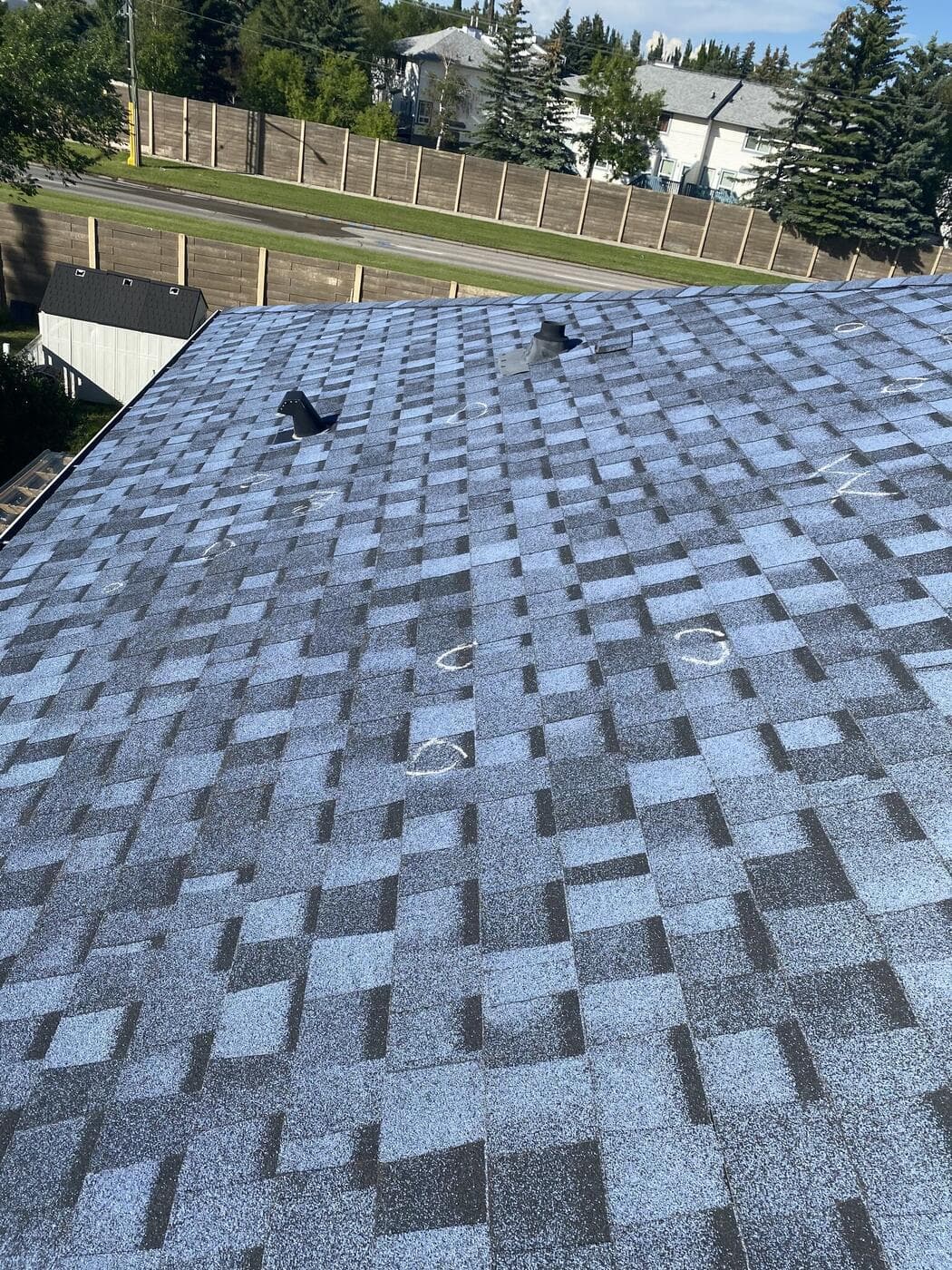
This storm brought hail and heavy rain. The Insurance Institute for Business & Home Safety (IBHS) lists these as the signs of hail on an asphalt shingle roof:
- A random pattern of marks across a slope, not a line or one cluster.
- Bruises: soft spots you can feel when pressing on the shingle, where the mat under the granules has fractured.
- Cracked or broken shingles, especially along the ridge caps.
- Dents on the metal: the top of the eavestrough, vent caps, fence caps and the air conditioner, on the side the storm came from.
- Chips, cracks or holes in siding and window screens, which often show before anything on the roof does.
- Water stains on ceilings or in the attic. Note where water came in: policies can treat water through the roof differently from water that came in at ground level.
Look from the ground, not from a ladder. What it looks like in photos is on our hail damage guide.
STRAIGHT ANSWERS.
Is it too late to claim damage from the July 2, 2021 storm?
It depends on your policy and on when you found the damage. Alberta's statutory conditions require prompt written notice of a loss, and a court action over a property claim generally has to start within 2 years of when you knew or ought to have known about the damage. If you've only just found damage from this storm, report it now and ask your insurer what it needs. This is general information, not legal advice.
How do I show the damage came from this storm and not from age?
Hail leaves a recognisable pattern: random impacts, granule loss at the strike points and bruising you can feel, plus dents on the soft metals, which reads differently from even weathering. A report that photographs that pattern slope by slope, with scale references, and reasons from it to a dated storm is what ties damage to a date of loss. An assertion without that reasoning is not documentation.
My roof was replaced after this storm. Should I still get it looked at?
It can be worth it. Vents, flashing, skylights, eavestrough and siding take hail on their own, and they can be left out of a roof-only scope. If anything on the house wasn't replaced, it's worth a look.
Why did the estimate for the July 2, 2021 storm change?
Initially estimated by CatIQ at $247 million in August 2021. The latest figure is over $600 million, published September 2022. Insured-loss estimates are revised as claims are counted and closed, so an early number is rarely the final one.
WAS YOUR ROOFIN ONE OF THESE?
Tell us the storm date and your address. We'll document what's actually on the roof.