
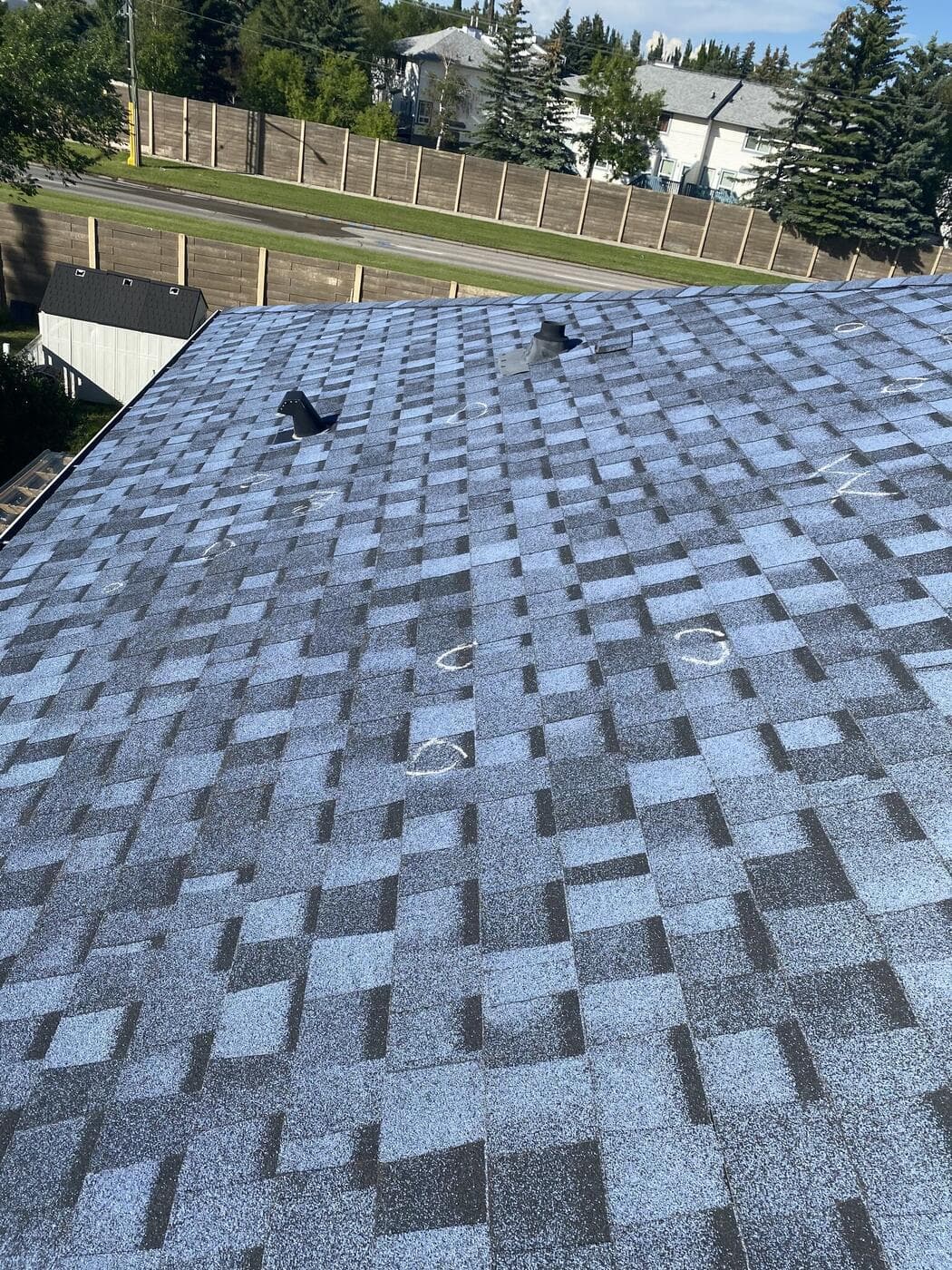
The hour after a hailstorm feels urgent. The yard is white, there's a dent in the car, and within a day or two someone is knocking on your door with a clipboard.
Take a breath. Very little about a hail claim has to happen in the first hour, and the most expensive mistakes are made by people who rush. This checklist puts things in the order that protects your family, your house and your claim. It's general information: your own policy wording is what applies to you.
1. Safety first
Hailstorms often come with lightning, strong wind and heavy rain. The Government of Alberta advises taking cover as soon as hail starts to fall, and waiting 30 minutes after the last rumble of thunder before going outside.
- Stay inside and away from windows, glass doors and skylights until the storm has moved on.
- Check for broken glass, water coming in and any damage to the ceiling.
- Keep away from downed power lines and anything touching them. Report them to your utility.
- Do not climb onto the roof. Wet, hail-covered shingles are slippery, and damage can hide weak spots.
2. Photograph from the ground, the same day
Hail damage on shingles can be hard to see, even for trained eyes. Softer materials tell the story much more clearly, so photograph them first. They're among the things inspectors and adjusters commonly check for signs that a storm hit your property.
- Eavestroughs and downspouts: dents on the top edge and down the face.
- Soft metals: roof vents, chimney caps, meter covers, air conditioner fins, mailboxes.
- Siding and trim: cracks, holes or chips, especially on the side facing the storm.
- Window screens: small tears or dents in the mesh.
- Your car, fence and deck: dents, chipped paint and spatter marks.
- The hail itself: a few stones next to a coin or ruler for scale, if they're still on the ground.
3. Stop more damage from getting in
Alberta's statutory conditions, which the Insurance Act makes part of property insurance contracts in the province, require you to take all reasonable steps to prevent further loss or damage after a loss. The same condition says the insurer contributes, on a prorated basis, toward reasonable and proper expenses for doing that.
In practice, that means small, sensible steps. Cover a broken window. Put a bucket under a drip and move belongings out of the way. If the roof is actively leaking, a roofer can tarp it. Keep receipts for everything, and photograph the damage before you cover it.
4. Call your insurer or broker, and know when
Alberta's statutory conditions require you to give your insurer written notice immediately after a covered loss. The Act doesn't set a number of days, so the safe approach is to contact your insurer or broker as soon as you reasonably can, get a claim number, and follow up in writing so there's a record.
You don't need to know the full extent of the damage to report it. Tell them the date of the storm, what you've seen so far and whether water is getting in. Ask what your hail deductible is, because if it's high, that affects your next decisions. Percentage deductibles in Alberta explains how to read yours.
5. Write down the date of loss
Your claim is tied to one storm, called the date of loss. It seems obvious the day after, but it gets hard to prove months later, especially in a city that gets hit most summers.
- Write down the date and approximate time the hail fell at your house.
- Screenshot any Environment Canada warning or news report for your area that day.
- Note whether neighbours had damage too.
- Keep your photos in one folder named with the date.
6. Don't sign anything at the door
Contractors arrive quickly after a big storm. Many are legitimate, but some rely on pressure. Aviva Canada has warned Albertans that some contractors promise to waive deductibles and then try to inflate the scope of damage to cover it. Watch for these scripts:
- "Your claim is already approved." Only your insurer decides what's covered.
- "We'll cover your deductible." If that cost gets hidden in the claim, it's a false statement to your insurer, and it's your claim at risk.
- "Sign here so we can inspect." A look at your roof doesn't need a signature. Read anything you're handed, indoors, without someone waiting.
- "This price is only good today." Real roofing prices don't expire by tonight.
7. Get a proper inspection
Once the dust settles, have the roof inspected by someone who will document it properly, not just glance at it. A useful inspection covers every slope, the soft metals, siding, eavestroughs and vents, with photos you can give your insurer. A good inspector will also tell you plainly if there's no real damage.
Your insurer will usually have an adjuster look at the damage. If you have an inspection report, share it before the adjuster's visit, and be home for it if you can. How adjusters assess hail explains what they look for, and the roof insurance claim, step by step covers what happens next.
How soon should I call my insurance after a hailstorm?
As soon as you reasonably can. Alberta's statutory conditions require written notice immediately after a covered loss. Contact your insurer or broker right away and follow up in writing so there's a record. You can report the claim before you know the full extent of the damage.
Should I get on my roof to check for hail damage?
No. It's risky, and you don't need to. Photograph dented eavestroughs, vents, siding, screens and your car from the ground, then have a professional inspect the roof itself.
How do I know if my roof has hail damage?
Look for clues around it. Dents on eavestroughs, downspouts and roof vents, torn window screens and cracked siding all suggest hail heavy enough to be worth a closer look at the shingles. An inspection confirms whether the shingles themselves were damaged.
Is it legal for a roofer to pay my deductible?
Treat the offer as a red flag. Aviva Canada has warned Albertans about contractors who promise to waive deductibles and then try to bulk up the scope of damage. Under Alberta's statutory conditions, a wilfully false statement in your proof of loss invalidates your claim, so say no.
Can I cancel a roofing contract I signed at my door?
Often, yes. The Government of Alberta says you can cancel a door-to-door sale, or a prepaid contract signed at your home, within 10 days of receiving your copy of the signed contract. Conditions apply, so check the Government of Alberta's consumer rights page for the details.
Where the facts on this page come from. If a source has changed since we last checked, tell us and we'll fix the page.
- Insurance Act, RSA 2000, c I-3, s. 540 (Statutory Conditions) · Alberta King's Printer
- Hail and insurance · Insurance Bureau of Canada
- Thunderstorms, lightning, heavy rain and hail · Government of Alberta
- Alberta hail storm (press release) · Aviva Canada
- Consumer Bill of Rights · Government of Alberta
- Prepaid contracting licence · Government of Alberta