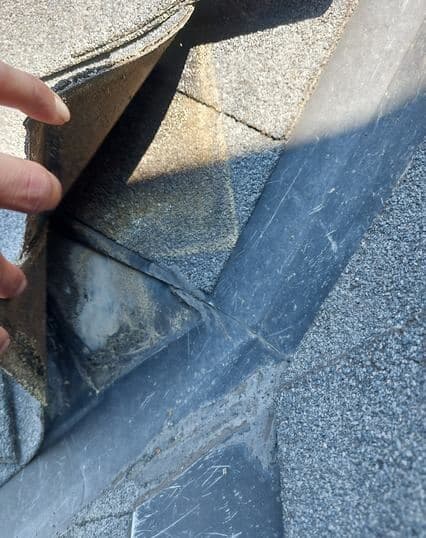
After a big wind, the obvious sign is shingles in the yard. The less obvious signs are on the roof: shingles that lifted and dropped back, creased across the top, or quietly let go of the sealant strip that was holding them flat.
Calgary sees strong winds regularly, from chinooks to summer thunderstorms. This guide explains what wind actually does to asphalt shingles, how to spot the damage from the ground, what those wind ratings on the package really mean, and when insurance comes into it.
How wind damages a roof
Wind flowing over a roof creates suction that pulls up on the roofing. FEMA's guidance on sloped roofs notes that the roof border, including the eaves and rake edges, is more at risk from wind uplift than the rest of the roof, and for high-wind areas it recommends extra roofing cement under shingles along the eaves, rakes, hips and ridges.
That pattern is useful. Damage that starts at the edges fits wind. Damage scattered across the middle of a slope while the edges are fine is worth asking a roofer about, since nailing or sealing problems may also be involved.
What wind damage looks like
Modern asphalt shingles are held down by nails and by a factory-applied strip of asphalt sealant that bonds each shingle to the one below after it warms up in the sun. IKO's warranty notes the strip needs direct sun and warm temperatures for several days to fully seal. A lot of wind damage starts with that bond failing.
- Creased shingles. A shingle that lifts and flexes in wind can crease across the top. A crease weakens the shingle, and it may not lie flat or shed water as well again.
- Lost sealant bond. The shingle is intact but no longer stuck down, so the next wind can catch its edge more easily.
- Lifted shingles. Edges sitting up off the roof, often visible in low morning or evening light.
- Missing tabs or whole shingles. Often at edges, ridges and hips, with exposed underlayment or nail heads.
- Damage at penetrations. Shingles lying on top of flashing around pipes and vents may not bond to a shingle below, so they can be more vulnerable unless they were hand-sealed.
- Debris hits. Branches and flying objects can gouge, tear or puncture shingles.
Why a few missing shingles can mean more
When one shingle blows off, the shingles around it took the same gust. Some may have broken their sealant bond, or creased, without leaving the roof. Once a seal is broken, the next wind catches that edge more easily, and the process repeats. That's why patching the obvious gap and walking away often means another call after the next windy day.
There can also be underlying causes a roofer should look for. FEMA's guidance stresses nails placed in the manufacturer's nailing zone or on the nail line and driven correctly. IKO's high-wind warranty terms call for starter strips at the eaves and rakes. The Asphalt Roofing Manufacturers Association warns that moss can lift or curl shingle edges and raise the risk of blow-off.
- From the ground with binoculars, check corners, eaves, rakes, hips and the ridge first.
- Look for lifted edges, creases, and shingles lying at odd angles, not just gaps.
- Photograph the roof and any shingles in the yard, with the date.
- Have a roofer check the seal on the shingles around each gap by hand, not just replace the missing ones.
Wind ratings versus real gusts
Shingle packages list wind test results, and they're easy to misread. IKO's technical bulletin explains the two common test standards. ASTM D3161 has classes at set wind speeds, such as Class F at 110 mph (about 177 km/h). ASTM D7158 rates shingles to a theoretical wind speed, where Class H is a theoretical 150 mph (about 241 km/h). IKO also notes that meeting Class H doesn't change its limited wind warranty.
The warranty is a separate, more practical number. IKO's Canadian limited warranty sets a maximum gust speed for blow-off coverage that depends on the shingle. For some shingles it's gusts up to 112 km/h during the first five years, while listed shingle lines carry their own limits, and some of those rise with a high-wind nailing pattern. For its wind coverage, shingles installed in fall, winter or cool weather must be manually sealed at installation.
- Test ratings describe new, properly sealed shingles in a lab, not a 15-year-old roof.
- Shingles installed in cold weather may not bond until the sun warms them, which is why warranties care about hand-sealing.
- Nailing, starter strips and the condition of the roof matter as much as the rating on the bundle.
Insurance considerations
The Insurance Bureau of Canada says standard home insurance policies cover damage caused by hail or wind. What that means for your roof depends on your wording: your deductible, whether the roof is settled at replacement cost or depreciated value, and any roof-age limits.
The IBC advises reporting damage as soon as possible, taking photos, and acting to limit further damage, which on a roof usually means a tarp or temporary repair. Keep receipts. For a small wind loss, compare the repair cost against your deductible before you file. Our step-by-step guide to roof claims, percentage deductibles and ACV versus RCV explain the rest.
How much wind does it take to blow shingles off?
It depends on the shingle, its age and how it was installed. A sound, properly sealed and nailed roof should handle ordinary strong gusts. Manufacturer warranties set their own limits: IKO's Canadian warranty, for example, sets gust limits by shingle line, starting at 112 km/h for some shingles in the first five years. Older, unsealed or poorly nailed shingles can lift in lighter wind.
Can a few missing shingles be repaired, or do I need a new roof?
Usually they can be repaired if matching shingles are available and the surrounding shingles are still sound. If many shingles have lost their seal or the roof is near the end of its life, repair becomes a short-term patch. See our guide on repair or replace.
Is wind damage to my roof covered by insurance in Alberta?
The Insurance Bureau of Canada says standard home policies cover wind damage. Your deductible, roof-age terms and depreciation rules still apply, so read your policy or ask your broker before assuming a payout.
How do I know if shingles lost their seal?
From the ground you may see edges sitting up or shingles moving in wind. Confirming it takes a roofer gently lifting shingle edges to check whether the sealant strip is bonded, which should be done on a dry, safe roof.
Where the facts on this page come from. If a source has changed since we last checked, tell us and we'll fix the page.
- FEMA P-2181 Fact Sheet 3.3.1: Roof Systems, Sloped Roofs · U.S. Federal Emergency Management Agency
- Algae & Moss Prevention and Cleaning for Asphalt Roofing Systems · Asphalt Roofing Manufacturers Association
- How to file a home insurance claim · Insurance Bureau of Canada
- Residential Information Bulletin R-68: ASTM D7158 Class H · IKO
- Limited Warranty Information for Asphalt Shingles (Canada) · IKO
- Tornadoes and extreme winds · Government of Alberta
- Hail and insurance · Insurance Bureau of Canada
- Chinook · The Canadian Encyclopedia