
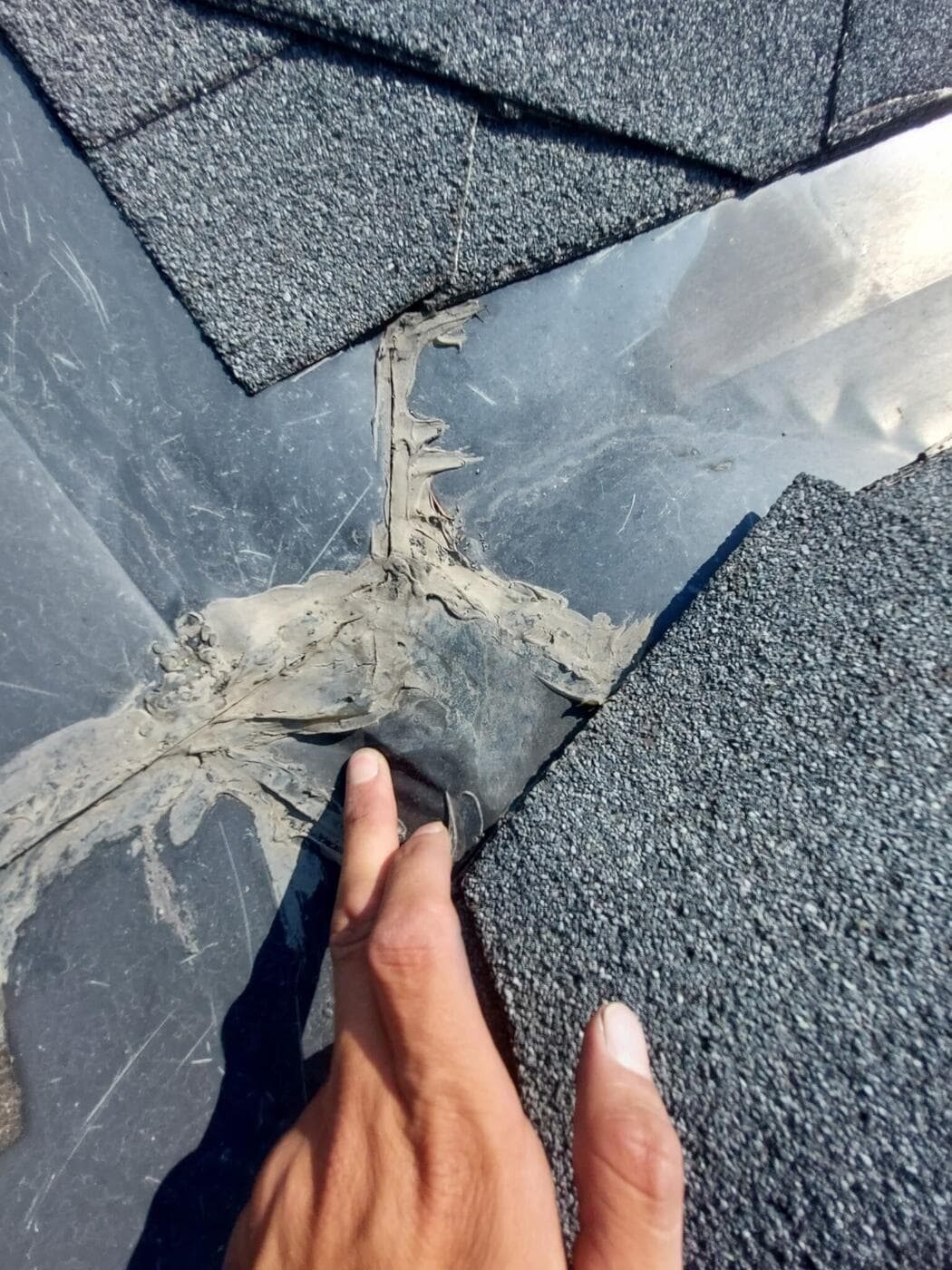
If you've seen a thick shelf of ice along your eaves with icicles hanging off it, and maybe a brown stain on the ceiling near an outside wall, you've met an ice dam. They're one of the most common winter roof problems in Calgary, and one of the most misunderstood.
The ice itself isn't really the problem. The problem is the heat that made it, and the water trapped behind it. Once you understand that, the right fixes and the wrong ones become obvious.
How an ice dam forms
The Insurance Bureau of Canada describes ice dams as ridges of ice that typically form at the edge of your roof or in the eavestroughs. The U.S. Department of Energy's Building America program puts it in three conditions: snow on the roof, a poorly air-sealed or poorly insulated attic, and freezing temperatures outside.
Here's the sequence. Warm air from the house leaks into the attic and heat conducts through thin insulation. Natural Resources Canada explains that if the attic is above freezing, it warms the roof sheathing and melts the layer of snow sitting on it, and that deep snow acts as an insulator, which makes this worse. That can happen even when it's well below zero outside. The meltwater runs down to the overhang, which sits over the unheated eave and stays cold, and it freezes. Each melt adds another layer. The ridge grows, and water starts to pool behind it.
Why Calgary gets so many of them
Most cold places get one long freeze and one spring thaw. Calgary gets chinooks: warm, dry winds off the Rockies that can push temperatures above freezing in the middle of winter and then let them drop again. The Canadian Encyclopedia notes that in southwestern Alberta about one in three winter days is a chinook day, and that a rise of 27°C in 2 minutes has been observed at the onset of one.
For your roof, each swing is a fresh melt-and-refreeze cycle. Snow melts during the warm spell, meltwater runs to the eaves, and it freezes again when the cold returns. A house that might build one modest ice dam somewhere steadier can build and rebuild one many times in a Calgary winter. More on this in chinooks, freeze-thaw and your roof.
The root cause: heat loss, insulation and ventilation
Every lasting ice dam fix happens in the attic. Building America says the most important step is sealing air leaks from the house into the attic. Common culprits are gaps around electrical wiring, recessed lights, plumbing stacks, furnace flues, the attic hatch and drywall seams. Then comes enough insulation to stop heat from reaching the decking. Then ventilation, to keep the attic air cold and carry away moisture that gets in anyway.
- Air sealing first. Natural Resources Canada notes that air leaks through chimneys, vents, plumbing pipes and electrical boxes can account for substantial heat loss. Sealing them is the step people skip because it's fiddly work in an itchy attic, and it matters most.
- Insulation second. More insulation slows conducted heat. It doesn't stop air leaks, so add it after the sealing, not instead of it.
- Ventilation third. Natural Resources Canada cites a common ratio of 1 unit of unobstructed vent area per 300 units of insulated ceiling area for peaked roofs. Soffit vents must stay clear of insulation. Building America recommends at least a 2-inch air gap between the top of the insulation and the underside of the roof deck.
- Eave protection. Building codes commonly call for a protective membrane along the eaves, and many roofers use a self-adhered ice and water membrane there. It's a backup that limits leaks when a dam does form, not a cure. See underlayment and ice and water shield.
Safe removal versus dangerous removal
When there's already an ice dam and water coming in, you need relief now. Some methods help. Others do more damage than the water would have.
| Method | Verdict | Why |
|---|---|---|
| Roof rake from the ground | Reasonable | Pulling the bottom metre or so of snow off reduces the meltwater feeding the dam. The IBC lists roof rakes as a prevention step. Stay on the ground and watch for power lines. |
| Clearing eavestroughs and downspouts in fall | Reasonable | The IBC lists clearing eavestroughs of debris as a way to help prevent ice dams. Clean them before the snow flies. |
| Hiring a pro to steam off the ice | Ask a pro | Some roofers use low-pressure steam to melt channels through thick ice. Ask how they will protect the shingles and work safely. |
| Chipping with an axe, hammer or shovel | Dangerous | It gouges shingles, tears off granules and punches holes, and the person doing it is usually on a ladder over ice. |
| Pressure washing | Dangerous | The Asphalt Roofing Manufacturers Association says never to pressure-wash an asphalt shingle roof, because it causes granule loss and likely premature failure. |
| Climbing onto an icy roof | Dangerous | There's no safe footing on an ice-covered roof. Leave it to a crew with fall protection. |
| Throwing de-icing salt on the roof | Avoid | It's a guess at best, it means working over ice, and the runoff lands on whatever is below. Ask a roofer before putting any chemical on shingles. |
Heat cables: pros and cons
Heat cables are electric resistance cables clipped along the eaves in a zigzag and often run down the eavestroughs and downspouts. They melt channels so water can drain instead of pooling. The IBC lists them among prevention options. They treat the symptom rather than the heat loss behind it, so they make the most sense where fixing the attic isn't practical, and only when installed and used properly.
- Pro: they can protect a known trouble spot, like a low eave over a vaulted ceiling or a story-and-a-half house where the attic can't be properly sealed and insulated.
- Pro: kept clear, eavestroughs and downspouts keep draining instead of freezing solid.
- Con: they don't fix the heat loss causing the dam. The attic keeps melting snow, and the ice can form just above the cables.
- Con: they need to be on before snow piles up. Switching them on under a thick dam does little.
- Con: they use electricity all winter, and poorly fastened clips can damage shingles. Installation should follow the manufacturer's instructions, with any wiring done safely and to code.
Does home insurance cover ice dam damage in Alberta?
The Insurance Bureau of Canada says standard policies commonly cover sudden and accidental water damage caused by ice dams, but ongoing or repeated damage may be treated as a maintenance issue and not covered, and some basic policies may exclude it. Check your policy wording and report water damage to your insurer quickly.
Are icicles a sign of an ice dam?
Big icicles along the eaves usually mean water is melting higher up and refreezing at the edge, which is the same process that builds an ice dam. A few small icicles aren't a crisis. A thick ridge of ice with icicles is worth a closer look.
Will more attic ventilation stop ice dams by itself?
Usually not. Ventilation helps keep the attic cold, but if warm house air keeps pouring in through gaps around lights, pipes and the hatch, vents can't keep up. Seal the air leaks first, then insulate, then make sure the vents are clear.
Should I remove snow from my roof in Calgary?
Raking the lower edge of the roof from the ground after a heavy snowfall is reasonable if it's safe to do. Don't climb onto a snowy or icy roof. If you're worried about snow load or a dam that's already leaking, call a roofer.
Where the facts on this page come from. If a source has changed since we last checked, tell us and we'll fix the page.
- Stay protected: Understanding and helping prevent ice dams · Insurance Bureau of Canada
- Attic Air Sealing, Insulating, and Ventilating for Ice Dam Prevention · U.S. Department of Energy, Building America program
- Keeping The Heat In, Section 5: Roofs and attics · Natural Resources Canada
- Chinook · The Canadian Encyclopedia
- Algae & Moss Prevention and Cleaning for Asphalt Roofing Systems · Asphalt Roofing Manufacturers Association