
A drip in the ceiling makes everyone look straight up and assume the hole is right there. It usually isn't. Water that gets past your shingles lands on the roof decking, then runs downhill along the wood, a rafter or the top of the attic insulation until it finds a low spot or a nail to drip from. By the time it shows up as a brown ring on your drywall, it can have travelled a long way.
This guide walks you through where leaks actually start, what you can check from inside without risking your neck, and how to limit the damage until the roof is fixed.
Why the stain is rarely under the hole
Your roof is a sloped surface with layers under it. Water that gets through the shingles hits the underlayment or decking and follows gravity. It clings to the underside of the wood, runs along a rafter or truss, and drips where the path ends. Sometimes that's straight down. Often it's at the next rafter, the attic hatch, a light fixture or an exterior wall.
That's why patching the shingles directly above the stain so often fixes nothing. The real entry point is usually uphill of the stain, and sometimes off to one side along a rafter.
The usual suspects
Field shingles in the middle of a slope tend to leak less than the details. Leaks usually start where the roof is interrupted by something: a pipe, a wall, a change in direction or a hole someone cut. Start your thinking here.
- Pipe boots. The rubber collar around a plumbing vent pipe cracks with sun and age. Water runs down the pipe and into the attic. It's a common place for leaks to start.
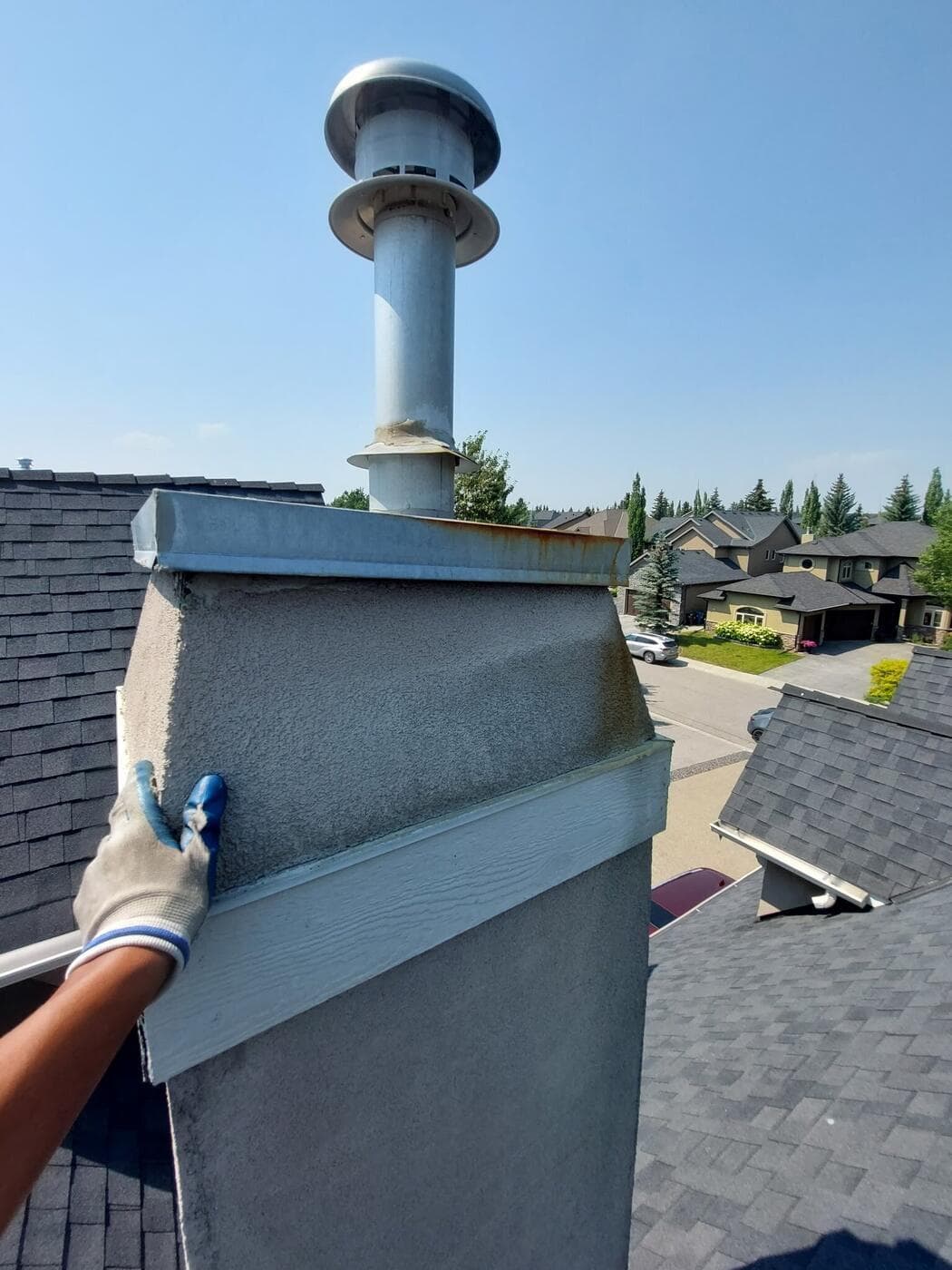
- Flashing at walls and chimneys. Where a roof meets a wall, metal step flashing is woven in with the shingles and turns up the wall. If it's missing, bent or was never tucked behind the siding, water gets behind it. Chimneys add a second risk: failed counter-flashing or cracked mortar above the roof.
- Valleys. Where two slopes meet, all the water from both concentrates in one channel. Debris packs in, snow and ice sit there longest, and a poorly cut valley leaks.
- Skylights. Leaks come from the flashing kit around the frame, a failed seal in the unit itself, or condensation running off the glass inside. Each one needs a different repair.
- Roof vents and exhaust caps. Box vents, turbine vents and bathroom or kitchen exhaust caps are all holes in the roof held watertight by flashing and sealant.
- Nail pops. A nail that backs out lifts the shingle above it and can punch a small hole. Many small holes add up.
- Ice dams. In winter, meltwater backs up behind a ridge of ice at the eaves and gets pushed under shingles that were only ever designed to shed water. See ice dams in Calgary.
The leak that isn't: attic condensation
Warm, moist air from your house leaks into the attic through gaps around light fixtures, plumbing stacks, the attic hatch and electrical boxes. In a cold snap that moisture freezes on the underside of the roof decking and on nail tips as frost. When a warm day comes, it all melts at once and drips onto the insulation and ceiling. It looks like a roof leak, it shows up on a sunny day, and no shingle repair will stop it.
Natural Resources Canada says some frost in an attic during a cold snap is expected, but heavy buildup of about 10 mm (3/8 in.) or more is a sign to check that your ventilation is present and not blocked with insulation. The real fix is sealing the air leaks from the house and making sure the attic vents work. Our guide to attic ventilation goes deeper.
What you can safely check from inside the attic
You can learn a lot from the attic without going on the roof. Go in daylight with a good flashlight, and step only on the joists or on boards laid across them. The ceiling drywall between joists won't hold you. Natural Resources Canada notes that an attic with less than about 1 m (39 in.) of clearance won't let you move around freely, so don't force it in a low attic.
- Start above the stain and look uphill toward the ridge for dark wood, water trails or rusty nail tips.
- Follow any stain on the rafters or decking back to where it starts. That's closer to the entry point than the ceiling stain.
- Look hard at every penetration in that area: plumbing vent pipes, exhaust ducts, the chimney chase and skylight shafts.
- Check for frost or water droplets on nail tips and on the underside of the decking, especially after a cold snap.
- Check the insulation for wet or matted patches, and whether it's pushed up against the eaves where it could block soffit vents.
- Take photos of everything you find, with something in the frame for scale.
What to do right now to limit damage
The goal in the first hour is simple: keep water off things that can't get wet, and keep a small problem from becoming a ceiling collapse.
- Put a bucket or bin under the drip and move furniture, rugs and electronics out of the way.
- If the ceiling is bulging with water, place a bucket underneath and poke a small hole at the lowest point with a screwdriver to let it drain in a controlled way. A bulge left alone can bring that section of ceiling down.
- If water is near a light fixture or electrical box, switch that circuit off at the panel.
- In the attic, lay down a plastic sheet or container to catch water if you can reach the spot safely.
- Photograph the stain, the drip and any attic evidence before you clean up.
- If there's real damage, call your insurer. The Insurance Bureau of Canada notes your policy requires you to act to limit further damage, so save receipts for buckets, tarps and emergency repairs.
Why is my roof leaking only when it rains hard or the wind blows?
Heavy or wind-driven rain pushes water sideways and uphill, into places light rain never reaches. That points to flashing at walls and chimneys, lifted shingles, or vents and pipe boots facing the wind. It's a detail problem, not usually a worn-out roof.
Why does my ceiling leak on sunny days in winter?
Two likely causes. An ice dam can hold meltwater at the eaves and push it under the shingles on a mild day, or frost that built up in the attic during a cold snap is melting. Check the eaves for thick ice and the attic for frost on nail tips.
Can I find a roof leak with a garden hose?
Pros do it: one person runs water on one small area at a time, starting low and working uphill, while another watches in the attic. It needs a dry, safe roof and patience, and it isn't a job for a ladder and a hose on your own.
Is a small roof leak an emergency?
Not every drip needs a crew tonight, but no leak should wait weeks. Water soaks insulation, rots decking and grows mould out of sight. Contain it, document it and get it looked at within days.
Where the facts on this page come from. If a source has changed since we last checked, tell us and we'll fix the page.
- Keeping The Heat In, Section 5: Roofs and attics · Natural Resources Canada
- Info-303: Common Flashing Details · Building Science Corporation
- Stay protected: Understanding and helping prevent ice dams · Insurance Bureau of Canada
- How to file a home insurance claim · Insurance Bureau of Canada