Class 4 is the top impact rating under UL 2218. The Insurance Bureau of Canada says Alberta has had at least one major hailstorm every year for two decades, and in August 2025 it put insured hail damage in the province over the previous five years at $6 billion. That makes the impact rating one of the most consequential product decisions on an Alberta roof.
It is also routinely oversold. Class 4 does not make a roof hail-proof, and shingle warranties commonly exclude hail damage.
What the test actually is
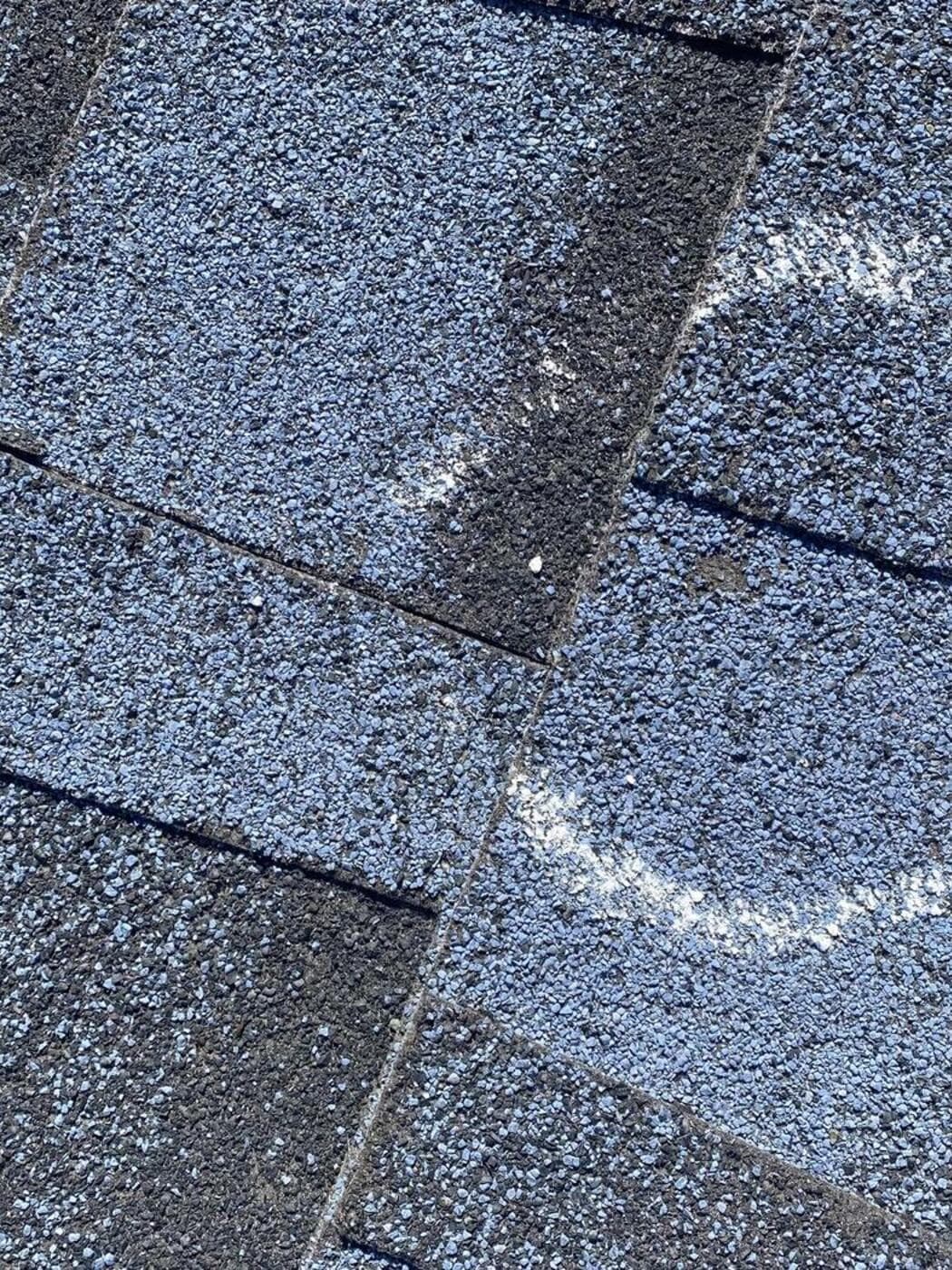
UL 2218 drops steel balls onto a test roof panel from the height needed to match the energy of a hailstone the same size. The classes differ by ball size: Class 1 is 1.25 inches, Class 2 is 1.5, Class 3 is 1.75, and Class 4 is 2 inches. Each test location takes two impacts, and it fails if a crack or tear shows on the back of the shingle. Dents or loose granules visible only on top don’t count as a failure.
Two things follow from that. First, it’s a laboratory test with a steel ball, and IBHS notes that standardized tests don’t exactly replicate natural hailstones, which vary in density, angle and wind. Second, it looks for an opening through the shingle, which is the kind of damage that lets water in.
What it does and doesn’t buy you
- It does raise the bar. A Class 4 shingle has passed a heavier impact than a lower-rated one, so it’s more likely to come through a storm that would crack a standard shingle.
- It does not make you immune. The Government of Alberta notes that hailstones range from pea size to grapefruit size. Nothing tested with a 2-inch ball is rated for grapefruit.
- It says nothing about wind, which is rated separately, damages roofs independently, and can go undocumented on a hail claim.
- It does not cover your vents, flashing, skylights or soft metals. Those take hail regardless of what shingle is beside them, and they are legitimately claimable.
About the insurance discount
Some insurers offer a discount for an impact-rated roof. Whether you get one, and how much, depends on your insurer, your policy and where you live, so we don’t quote a number.
What to actually do: call your insurer or broker before you buy, ask specifically whether they discount for a UL 2218 Class 4 roof and by how much, and get the answer in writing. Then ask what documentation they need, such as a product certificate and an invoice naming the product. Any contractor who quotes you a discount percentage is quoting you someone else’s policy. Ask separately whether a Class 3 roof qualifies, rather than assuming it does.
What we install
Fortified is our Class 4 option. We also install Essential and Signature, both Class 3 impact rated: that class passes the same test with a 1.75-inch ball instead of a 2-inch one. Fortified is a priced upgrade over both for the same roof. The difference is real, but it’s smaller than the swing from area, pitch, complexity and decking. In the parts of the city recent storms have hit hardest, Class 4 is worth pricing out alongside the other two. Whichever line you choose, ask for the manufacturer's spec sheet and check that the impact class is printed on it, not just on the quote.
One thing worth knowing about claims
A Class 4 roof that survives a storm your neighbours’ roofs didn’t is a good outcome, not a claim. That sounds obvious and it catches people: having paid more for the roof does not entitle you to a settlement when it worked. What it does entitle you to is a roof you didn’t have to replace, and possibly a lower insurance cost if your insurer offers a discount.
Is Class 4 worth the extra money in Calgary?
Often, especially in the parts of the city recent storms have hit. It’s a modest line in the overall quote, and it can change your exposure in a province that has seen a major hailstorm every year for two decades. If your insurer also discounts for it, the case gets easier.
Will my insurer definitely give me a discount?
No, and don’t buy on that assumption. Some do, some don’t, and the amount varies a lot. Confirm with your own insurer in writing before you count it toward the decision.
Does Class 4 come with a better warranty?
Not automatically. Impact rating and warranty term are separate things. The shingles we install carry the shingle maker’s limited lifetime warranty, whatever their impact rating. Our workmanship warranty on a replacement is 5 years whichever shingle you choose. Ask any contractor to state both separately, because blurring them is common.
My roof is Class 4 and it got damaged anyway.
That happens, and it’s a legitimate claim. Class 4 raises the threshold; it doesn’t remove it, and hail larger than 2 inches is past what the standard tests. The rating is about odds, not immunity.
Which of your shingles are Class 4?
Of the three lines we install, Fortified is Class 4 impact rated, the top hail rating. Essential and Signature are Class 3, one step below, tested with a 1.75-inch steel ball. None of them is hail-proof.
Where the facts on this page come from. If a source has changed since we last checked, tell us and we'll fix the page.
- Relative impact resistance of asphalt shingles: summary of UL 2218 impact tests · Insurance Institute for Business & Home Safety
- Alberta continues to see large-scale impacts from hailstorms · Insurance Bureau of Canada
- Latest hailstorm in Calgary causes $92 million in insured damage · Insurance Bureau of Canada
- Thunderstorms, lightning, heavy rain and hail · Government of Alberta